Introduction
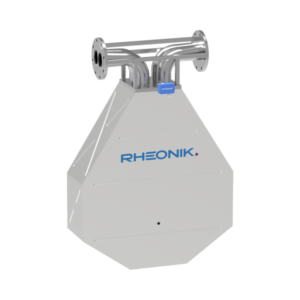
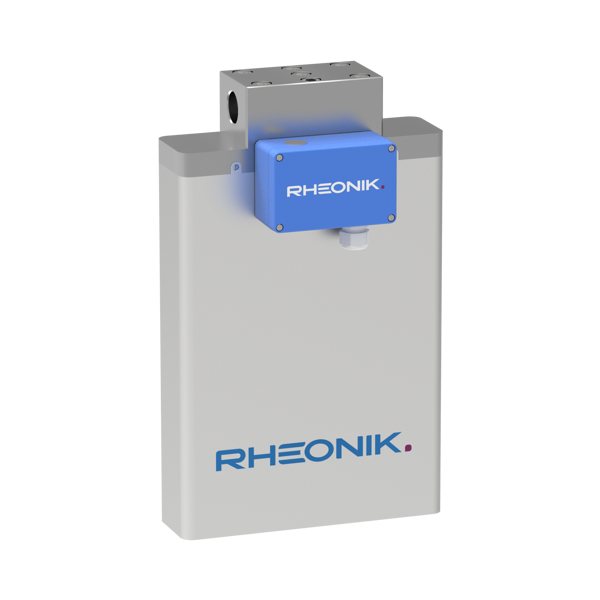
The Rheonik RHM 15 Coriolis Mass Flow Sensor is a high-performance, multi-purpose Coriolis mass flow meter engineered for precise measurement and control in demanding liquid processing applications. Designed to deliver exceptional accuracy, reliability, and long-term stability, the Rheonik RHM 15 supports a wide operational envelope, enabling standardization across multiple process lines and significantly reducing installation complexity and lifecycle costs for plant operators. Its robust construction and compatibility with a broad range of process media—including aggressive, high-pressure, and cryogenic fluids—make it ideally suited for industries such as oil & gas, chemical processing, power generation, and industrial manufacturing. The sensor incorporates advanced measurement technology to ensure consistent mass flow, density, and temperature readings, even under extreme operating conditions, thereby supporting enhanced process control, safety, and operational efficiency.
- Flow Range: 0.5 kg/min up to 240 kg/min, enabling flexible deployment across diverse process conditions
- Pressure Rating: Up to 1282 bar (18,593 psi), suitable for high-pressure applications
- Temperature Range: -196°C (-321°F) up to +350°C (662°F), covering cryogenic to high-temperature processes
- Accuracy: ±0.1% of rate, ensuring high-precision measurement and repeatability
- Material Options: SS 316L / SS 316Ti, Alloy C22 (2.4602), Super Duplex (1.4410), Tantalum (UNS R05200) for superior corrosion resistance
- Process Connections: ¾” up to 2½”, allowing seamless integration into various piping systems.
General Specification
| Nominal Flow (Qnom)* | 150 kg/min (330.7 lb/min) |
| Maximum Flow (Qmax)* | 200 kg/min (440.9 lb/min) |
| Typical Minimum Flow (Qmin)* | 2 kg/min (4.4 lb/min) |
| Serial Tube / Single Path | Flow rates Qmax, Qnom, and Qmin for “serial” sensors will be 50% of the above-listed parallel/dual path version. |
| Operating Temperature | Fluid temperature range options cover applications from -196°C to +350°C (-320°F to +662°F). For integral transmitter versions, please refer to the transmitter datasheet |
| Ambient Temperature | -50°C to +80°C (-60°F to +180°F) (standard), versions available for installation in a vacuum chamber (-260°C / -430°F) or oven (up to +210°C / +410°F) (optional) |
| Pressure Ratings | Up to 882 bar / 112792 psi – dependent upon material |
| Electrical Connection Sensor w/o Integral Transmitter |
M20 x 1.5 standard cable entry for JM, SM terminal box versions |
| Sensor Enclosure Materials |
Stainless steel 304 (standard), SS 316 (optional) |
| Enclosure Type | Protection class IP66, NEMA 4X (standard), IP66/67, NEMA 4X/6 (optional) |
| Wetted Materials |
Flow tubes SS 316Ti, Alloy C22, Tantalum or SuperDuplex |
| Process Connections | Nearly any – the Rheonik AnyPipeFit Commitment. Consult the factory for types/sizes not listed in this data sheet on the Mechanical Construction pages |
| Pressure Rating Compliance |
Europe – PED: Sound Engineering Practice (SEP), Module A2, Module B3.1+C2 |
| Certifications and Approvals |
ATEX / IECEx Approvals for Zone 0, 1 (details see page 17) |
| Testing and Inspection | All sensors are hydro tested, calibrated, and supplied with a traceable calibration certificate. Customized calibration and testing services are available |
| Project Documentation and QA, Services |
Rheonik offers a full set of services for large and complex engineering projects.
|
| Options |
Enclosure heating for high temperature applications |
Pressure Drop
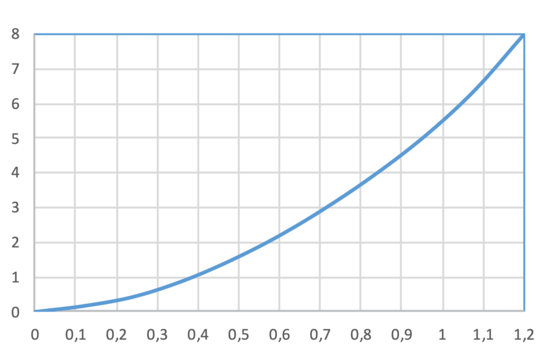
At Qnom, the pressure drop across a parallel tube sensor will be approximately 1 bar (14 psi) for H2O. Sensors can be operated at higher flow rates up to Qmaxax, but the pressure drop will be higher. Typical Minimum Flow Qmin is the recommended lowest flow rate for an accurate measurement. Sensors will measure flow rates lower than Qmin, but uncertainty will increase beyond 1% of the rate.
The flow specifications above relate to standard pressure, parallel tube, and manifold sensor versions. Models with higher pressure ratings have increased wall thickness and will have higher pressure drops.
Downloads